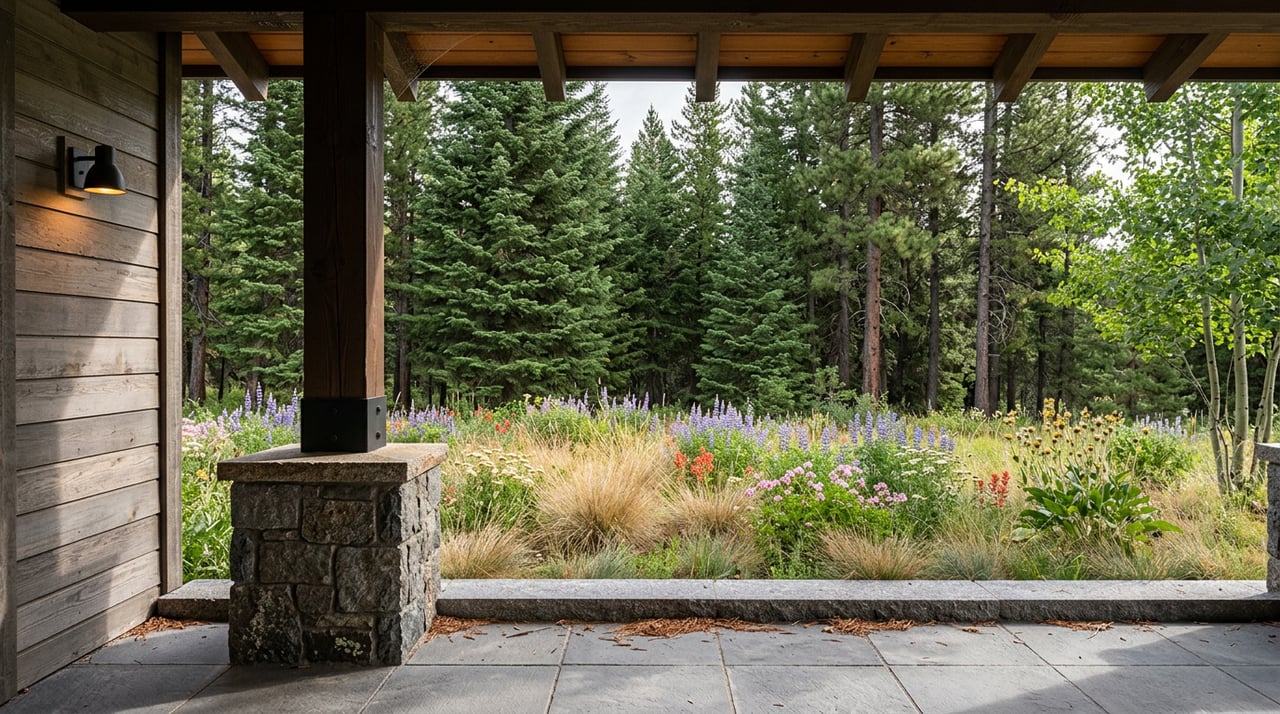
How do you know the bloom is on? The Beehive Basin lot is full by 8 a.m., the shoulders of Highway 64 are lined with SUVs, and the guests you invited for the weekend keep asking if you can "just get them up there before it's too late." The honest answer is that it's already too late for some of what they saw on Instagram in June, and it's exactly the right week for a lot of what they haven't seen yet.
The wildflower story just outside the Spanish Peaks gate is not really a season. It's a moving band that climbs uphill from mid-June through late August, and the difference between a good hike and a great one this week is knowing which elevation the band is sitting in right now. Balsamroot is fading. Columbine and paintbrush are on. Lupine is everywhere.
The Elevation Clock, Not the Calendar
The reason nearby ridgelines can look completely different from one trail to the next in the same week comes down to elevation, groundwater, and how little of Big Sky's summer window there actually is. Beehive Basin's trailhead sits around 7,500 feet and the head of the basin climbs above 10,700, which means a single hike passes through two or three bloom stages in a morning. Bear Basin, Ousel Falls, and the Uplands loop each sit at their own point on that clock.
Here's roughly where the trails just beyond the Spanish Peaks gate are this week:
| Trail | Approx. trailhead elevation | What's likely peaking mid-July |
|---|---|---|
| Uplands Trail (near Town Center) | ~6,300 ft | Balsamroot fading, lupine holding, geranium |
| Ousel Falls | ~6,500 ft | Shaded canyon bloomers, paintbrush, lupine along the rim |
| Beehive Basin (lower meadows) | ~7,500 ft | Yellow columbine, arnica, lupine, pink geranium |
| Beehive Basin (upper cirque) | 9,500–10,000+ ft | Late spring holdouts, spring beauties, harebell |
| Bear Basin (Lee Metcalf boundary) | ~7,200 ft | Paintbrush, lupine, upper meadows still coming in |
Nothing in the middle column is guaranteed on any given day. What is reliable is the ordering. If you want the June palette of arrowleaf balsamroot, larkspur, and bluebells, you're chasing it uphill or waiting until next year. If you want the midsummer palette, this is the window.
What Beehive Is Actually Showing Right Now
Between June and August, nearly 300 species of wildflowers grow in the basin, according to Montana State University botanist Matt Lavin. That number gets quoted a lot in Big Sky, and it's worth unpacking, because 300 species does not mean 300 species blooming on a Tuesday in July. It means the basin cycles through that many across ten weeks, and a hiker in mid-July is likely catching the densest middle stretch of that curve.
The reliable mid-July show at Beehive is yellow columbine and arnica, purple lupine, pink geranium, red paintbrush, with harebell tucked among the rocks higher up. The June cast of arrowleaf balsamroot, larkspur, white spring beauties, and delicate bluebells is mostly done at the lower benches and hanging on only in the shaded pockets and higher meadows.
Why Beehive in particular carries such a dense bloom in such a short window is a groundwater and geometry story more than a flower story:
There is a lot of groundwater in Beehive in the form of melted snow and summer rains and there are very few invasive species. "It's not a rarity, what you have in Beehive," Smithers said. "You will find these sorts of areas all over the northern Rockies. What's rare is its accessibility—how easy it is to be on that trail and in that situation."
That accessibility is the whole reason residents of Spanish Peaks end up hosting most of their July guests on this trail. It is a genuine alpine cirque you can reach from your driveway in twenty minutes. It is also the reason the parking lot has become the actual crux of the hike.
When Beehive's Lot Is Full, These Are the Local Moves
The Big Sky Community Organization and the U.S. Forest Service jointly manage the trailhead, and both the Upper and Lower Beehive lots are BSCO-run. The lower lot is paved and they quickly during peak summer months, particularly July and August. If you roll up after 9 a.m. on a Saturday in mid-July, you are not parking there. That's not a failure of planning, that's just July.
The most useful alternative is Uplands. For a wildflower fix without the all-day commitment, Uplands Trail delivers. At just 2.2 miles round trip, this loop starts minutes from Big Sky's Town Center and offers wide-angle views of Lone Mountain alongside meadows bursting with yellow balsamroot in early summer. One of the most accessible wildflower walks in the area. By mid-July the balsamroot show is winding down here, but lupine and geranium are still working, and the loop is short enough to slot in before dinner at the Clubhouse.
Ousel Falls is the guest-friendly option when the group includes anyone who does not want a real hike. It's shaded, it ends at a waterfall, and stretches of the trail are graded for strollers. The bloom along it is subtler than Beehive's alpine meadows because the canyon holds moisture and shade differently, but the paintbrush and lupine along the upper rim are on right now.
Bear Basin is the answer if what you actually want is solitude. The trail leaves the neighborhood, cuts past the edge of the Lone Mountain Nordic Ranch, crosses a Forest Service pine bridge over the North Fork of the West Fork of the Gallatin, and slips into the Lee Metcalf Wilderness. From the head of Bear Basin you can continue north to Summit Lake and Indian Ridge, or push toward Mirror Lake and the Spanish Peak Ranger Station. It's a longer commitment than Beehive and it draws almost none of Beehive's crowd, because it does not photograph as an alpine lake in a single frame. What it delivers instead is roughly the same wildflower biology in half the foot traffic.
The Parking Problem Is the Real Trail Difficulty
Every article about hiking near Big Sky tells you to go early. What "early" actually means in mid-July is 7 a.m. at the Beehive trailhead, not 9. The Upper lot fills first because it shaves off the initial climb, but the Lower lot goes not long after. If the Upper is full, take the Lower and treat the walk up as the warm-up. If both are full, the drive back down to Uplands is roughly ten minutes and you have a hike anyway.
Two other pieces of local calibration:
Weather turns fast at the elevations these trails cover. The upper cirque at Beehive is above 10,000 feet, and afternoon thunderstorms are the norm in July, not the exception. A morning hike is not just about parking. It's about getting off the ridge before the sky changes.
This is bear country. The trails around Beehive, Bear Basin, and the Lee Metcalf Wilderness see elk, moose, and both black and grizzly bears with regularity. Carry spray, make noise, hike in groups of two or more, and store food properly if you're going long enough to picnic at the lake.
The Case for Staying Inside the Gate
For members who have hosted the same Beehive hike three weekends running, the underrated move this week is to skip it entirely. Spanish Peaks has more than 20 miles of internal paths, bike trails, and fire roads that were reworked under a 2023 trails master plan for hiking and biking access to blue-ribbon trout streams, mountain-top vistas, and remote sites within the community. Wildflowers do not respect fence lines. The same lupine and geranium showing on Uplands are showing on the meadow-edge stretches inside Spanish Peaks, and the light in the last hour before sunset lands on the Madison Range across the golf course in a way that no public trail lot can compete with.
If a guest wants the full mountain-in-Montana afternoon without the drive to a trailhead, Fish Camp is quietly one of the best answers in the area. Set along a tributary of the Gallatin with two cabins, a dining tent, and a fire pit, it delivers a hike, a picnic, and a stretch of private water in an afternoon, with none of the pre-dawn logistics that Beehive now demands in July.
The broader point for anyone living here full time is that the wildflower window is short and layered. Missing one weekend of arnica and columbine at Beehive isn't the disaster it feels like when the group text starts. The bloom band keeps climbing. Next week the harebell will be more obvious in the rocks above the lake. The week after that, the upper cirque catches up. By late August the show is largely at the top of Lone Mountain and along Headwaters Ridge, and the low meadows have moved on to seed. Reading the elevation clock is what makes a resident's summer feel longer than a visitor's.
If you're weighing what year-round life actually looks like on this side of Lone Mountain, or you're thinking about how a home inside Spanish Peaks Mountain Club fits the way your family already uses the trails outside it, Life in Big Sky Real Estate knows this ground in every season. Live Big. Connect with our team.