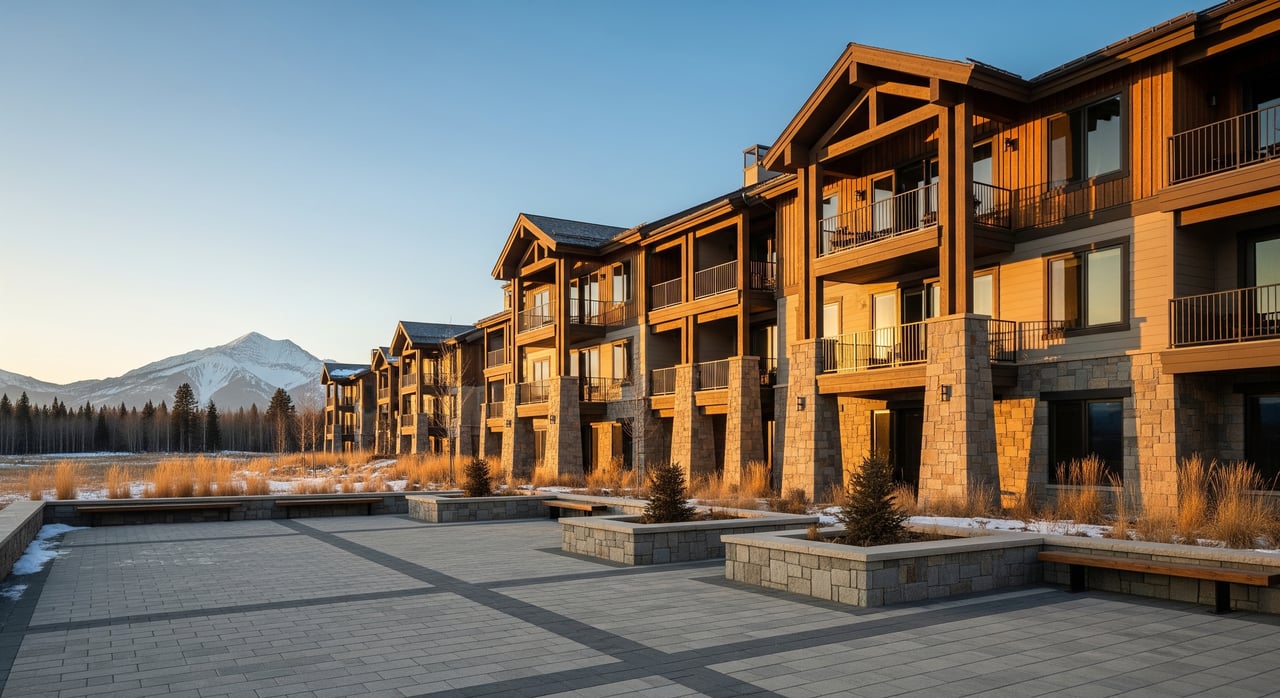
Are you eyeing a condo in Big Sky Town Center but unsure how lenders will view the building? In a resort setting, the mix of retail space, rental use, and layered HOAs can shift your loan options fast. In this guide, you’ll learn what makes a condo warrantable or non-warrantable, how that plays out in Meadow Village and Town Center, and what it means for your down payment, rate, and timeline. Let’s dive in.
Warrantable vs. non-warrantable basics
A warrantable condo meets the underwriting standards of Fannie Mae, Freddie Mac, or government programs like FHA and VA. Lenders can offer conventional conforming loans with typical down payments and pricing when a project is warrantable.
A non-warrantable condo fails one or more eligibility tests, such as high investor concentration, excessive commercial space, incomplete construction, special assessments, litigation, or insurance shortfalls. Non-warrantable projects usually do not qualify for standard conforming loans, so lenders treat them as higher risk with different terms.
In Big Sky’s Town Center and Meadow Village, resort and mixed-use designs can trigger closer scrutiny. Actual status depends on governing documents, ownership mix, completion status, insurance, and the HOA’s financial health.
Lender criteria that drive eligibility
Project completion and legal setup
- The project should be fully completed and legally created with recorded plats, declarations, and bylaws.
- Most lenders prefer a standard condo or PUD structure.
- Single-entity ownership over common limits can disqualify a project.
Owner occupancy and investor mix
- Agencies and lenders set caps on how many units a single party can own, often 10 to 20 percent.
- They also test the percentage of investor-owned or rented units. High rental share can create problems.
Commercial space share
- Mixed-use buildings are common in Town Center. Lenders often cap the amount of commercial space in a project. Many agency thresholds center around 25 percent of total space, though requirements vary.
HOA financial health
- Lenders expect an adequate operating budget and routine reserve contributions.
- High delinquent dues and large or imminent special assessments can cause ineligibility.
- A current reserve study and clear capital plan help.
Insurance and fidelity coverage
- The master policy must meet agency minimums for hazard coverage.
- Fidelity or crime coverage for those handling funds is commonly required.
- Coverage limits and named insureds must align with guidelines.
Litigation or material claims
- Pending or threatened litigation that affects the HOA’s finances or operations can make a project ineligible.
Ownership structure and use restrictions
- Standard fee simple condo ownership is expected. Timeshares and certain leaseholds are problematic.
- Unusual resale, financing, or occupancy restrictions can be an issue. Mandatory rental pools and certain fractional models can block conforming loans.
New construction and conversions
- New phases and conversions must meet completion and sales thresholds before conforming approvals apply. Agencies require proof of completion and occupancy.
Project documentation and governance
- Lenders review CC&Rs, bylaws, financials, insurance certificates, owner and renter lists, board minutes, and a completed condo questionnaire.
How this applies in Town Center
Resort and mixed-use risk factors
- Ground-floor retail and restaurant space can push the commercial share above agency thresholds.
- Investor and second-home ownership tends to be high in resort markets, which can test occupancy limits.
- Fractional interests and rental pools may be ineligible under conforming rules.
- Phased development and master associations add layers to the review. Lenders may request master financials and proof of how expenses are allocated.
Documents to collect locally
- Recorded declaration, plats, and legal description from Gallatin County.
- CC&Rs, bylaws, and rules with any amendments.
- Current budget, prior financials, and bank statements that show reserve balances.
- Reserve study and the schedule of planned capital projects.
- Master and association insurance certificates, including fidelity coverage.
- Completed condo questionnaire and the current owner roster that shows owner-occupancy and any bulk ownership.
- Board meeting minutes that note special assessments, litigation, or major projects.
- Proof of compliance with local zoning and building codes.
Who to contact in Gallatin County
- The HOA board or property manager for questionnaires, financials, and insurance.
- The Gallatin County Recorder or Clerk for recorded plats and declarations.
- The Town of Big Sky planning and building departments for occupancy and mixed-use classification.
- Local real estate attorneys and lenders who routinely work on Big Sky resort condos.
Financing impacts you should expect
When a project is non-warrantable, you may not be able to use standard conforming loans. Here is what that often means:
- Down payment: primary residences often require 15 to 25 percent or more. Second homes and investment properties often require 25 to 30 percent or more, depending on the lender.
- Interest rate: pricing usually carries a premium, from a few tenths to over 1 percent above comparable conforming loans based on lender and borrower profile.
- Cash reserves: many lenders require extra months of reserves beyond standard guidelines.
- Credit and underwriting: expect higher credit standards, tighter debt-to-income, and deeper review of HOA documents and any assessments.
- Government loans: FHA and VA usually require project approval. If the project lacks approval, those programs are typically unavailable.
Alternative financing paths
- Portfolio loans from local or regional banks. These are held on the lender’s books and can be more flexible, often with different pricing.
- Jumbo loans for higher-priced properties. Some lenders have internal condo reviews for select buildings.
- Private or hard money for quick closes. These are short-term and more expensive.
- Seller financing, bridge loans, or personal capital when timelines are compressed.
- Spot or single-unit approvals where a lender reviews one unit without full project approval, subject to the lender’s policy and project specifics.
Expected timelines
- Full condo project review: typically 2 to 6 weeks, depending on the HOA’s responsiveness and the project’s complexity.
- Spot or single-unit approval: often 1 to 2 weeks if the lender offers it and documents are complete.
- Portfolio or private financing: can be faster in some cases, though documentation can still be heavy.
Pre-offer due diligence checklist
- CC&Rs, bylaws, rules, and amendments.
- Current year budget, prior two years of financials, and bank statements that show reserves.
- Latest reserve study and capital project plan.
- Master and association insurance certificates, including fidelity coverage.
- Completed condo questionnaire and an owner roster with occupancy and bulk ownership details.
- List of pending or recent special assessments and amounts.
- Board minutes for the last 6 to 12 meetings or a summary of material issues.
- Any pending or threatened litigation and related insurance responses.
Smart questions to ask
Ask the HOA or manager
- What percentage of units are investor-owned or rented today?
- Are there any current or planned special assessments? What is the amount per unit and purpose?
- What is the current reserve balance and do you have a recent reserve study?
- What is the square footage split between residential and commercial space?
- Are there pending lawsuits or claims against the association?
- Do master and association policies meet lender coverage and fidelity requirements?
- Are any units in a rental pool, fractional program, or timeshare? What are the short-term rental rules?
- Is this a standard condominium or a PUD under the recorded documents?
Ask your lender or broker
- Do you regularly finance condos in Big Sky Meadow Village or Town Center? Which buildings have you closed recently?
- Will you need full project approval, or can you do a spot or single-unit approval?
- If the project is non-warrantable, what down payment, credit score, reserves, and rate premium will apply?
- Do you have portfolio or jumbo options for this building, and what are typical timelines?
- What specific HOA documents do you need and how long does your review take?
- Are FHA or VA loans possible for this project, or is separate approval required?
- Do you have any extra lender overlays for resort or mixed-use properties?
Offer and contingency pointers
- Include a financing contingency tied to lender acceptance of the project or to a specific loan product.
- Require the seller or HOA to deliver condo documents within a set period, such as 7 to 10 days.
- Consider a clause allowing termination and refund if the project is deemed non-warrantable and you cannot obtain acceptable financing.
Big Sky buyer tips
Start early with documents. Ask for the condo questionnaire, budget, insurance, and reserve study before you write.
Talk to experienced local lenders. They often know which Town Center buildings have closed with conforming or portfolio loans.
Budget for flexibility. If a project is non-warrantable, plan for a higher down payment, a rate premium, and extra time for review.
Keep options open. Ask about jumbo or portfolio paths, and explore spot approvals when available.
Ready to evaluate a specific Town Center or Meadow Village building, compare financing paths, or structure a clean offer? Reach out to the local team that lives and works these projects every day at Life in Big Sky. Live Big. Connect with our team.
FAQs
How can I quickly tell if a Big Sky Town Center building is warrantable?
- Ask your lender for a preliminary check and request the HOA condo questionnaire plus core documents; local lenders who work Big Sky often know which projects clear agency standards.
If a Town Center building is non-warrantable, what financing works?
- Look at portfolio loans from local or regional banks, jumbo options with internal reviews, or spot approvals when offered; expect different pricing and terms.
Does non-warrantable status stop me from getting a mortgage?
- Not necessarily, but you may face a higher down payment, a rate premium, extra reserves, and tighter underwriting compared with standard conforming loans.
Can an HOA fix issues that make a project non-warrantable?
- Sometimes, by boosting reserves, resolving litigation, addressing assessments, or reducing commercial share or investor concentration over time, though changes can take time and owner votes.
How does mixed-use design in Town Center affect eligibility?
- A higher share of commercial space can exceed agency thresholds, which may require portfolio or jumbo financing instead of standard conforming loans.